My research

My coaching and consulting are informed by over two decades of study and research in psychology, cognition, and neuroscience. My academic work has been published in world-leading scientific journals and featured internationally at conferences, in podcasts, and across media outlets.

Decisions and bias

As humans, we often need to make decisions quickly, without weighing every element rationally. While this can be adaptive, it also gives rise to cognitive biases, systematic patterns of thought that can significantly influence our decisions, sometimes with negative consequences. My research investigates the biases that shape how people make choices about their health and wellbeing.

For instance, in this research, we found that the ratio bias, the tendency to focus on the number of occurrences of a negative event rather than its actual probability, was the strongest predictor of vaccination behaviour during the COVID-19 pandemic. In my professional work as a psychologist and coach, I frequently encounter the real-world effects of biased thinking. For example, individuals considering a career change often struggle with the sunk cost fallacy—feeling unable to shift direction because of the time, money, or effort they have already invested in a particular path. Get in touch with me if you are interested in understanding how cognitive bias may be influencing your employees’ decisions, or if you are personally feeling stuck in a career due to biased reasoning
 

Key publications

Zaninotto, F., Bossi, F., Terry, P., Riccaboni, M., & Galli, G. (2022). The Evolution of Psychological and Behavioral Consequences of Self-Isolation During Lockdown: A Longitudinal Study Across United Kingdom and Italy. Frontiers in psychiatry, 13, 826277. https://doi.org/10.3389/fpsyt.2022.826277

Cantarella, M., Cantarella, S., Zaninotto, F., Riccaboni, M., & Galli, G. (2026). Biases in medical decision-making: A cross-medication comparison. Economics and human biology, 61, 101574. Advance online publication. https://doi.org/10.1016/j.ehb.2026.101574


Neural predictors of decisions

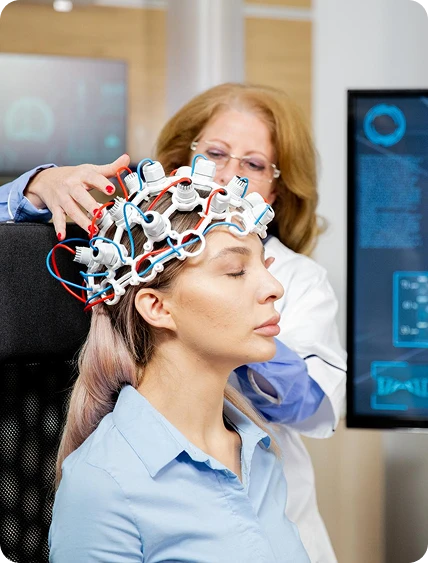
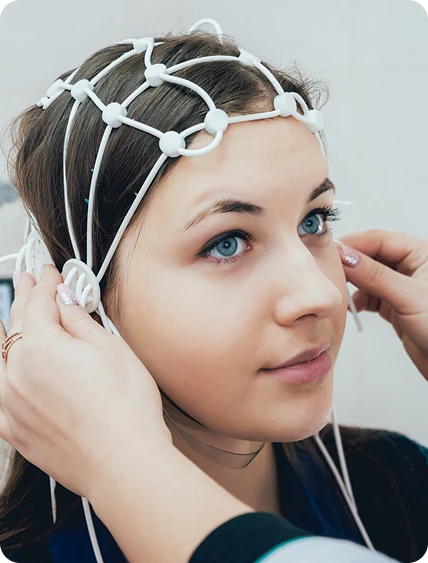
Did you know that what happens in your brain can predict your decisions, even if you are not consciously aware of those decisions? Throughout an international collaboration between political scientists and neuroscientists, my research has demonstrated that brain activity can predict voting decisions more accurately than self-reported preferences. This was shown in two studies featuring separate electoral contexts and countries.

There are two main reasons for this: people may be reluctant to share their true intentions, even anonymously, or they may have incipient preferences that they are not yet aware of. In either case, neural data can bypass conscious filtering and provide early, accurate indicators of decisions. Contact me If you are interested in applying behavioural or neural insights to better understand the decision-making patterns of your audience, or if you want to use measurements of brain activity to gain marketing insights.

Key publications

Galli, G., Angelucci, D., Bode, S., De Giorgi, C., De Sio, L., Paparo, A., Di Lorenzo, G., & Betti, V. (2021). Early EEG responses to pre-electoral survey items reflect political attitudes and predict voting behavior. Scientific reports, 11(1), 18692. https://doi.org/10.1038/s41598-021-96193-y

Galli, G., Sirota, M., Materassi, M., Zaninotto, F., & Terry, P. (2017). Brain indices of disagreement with one’s social values predict EU referendum voting behavior. Social cognitive and affective neuroscience, 12(11), 1758–1765. https://doi.org/10.1093/scan/nsx105

Healthy aging

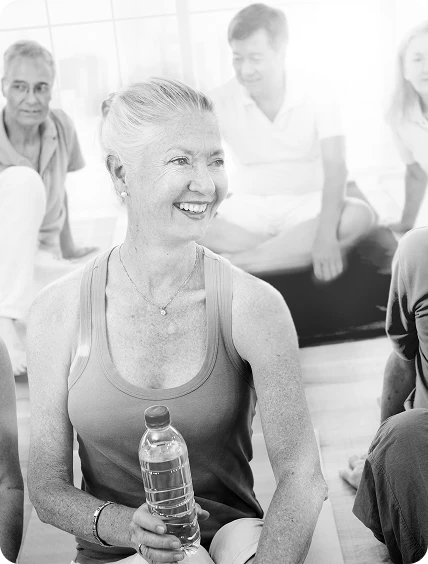
What happens to our brain as we grow older? And how can we age in a way that preserves mental vitality and cognitive function? My research focuses on the brain mechanisms involved in aging and the factors that support healthy cognitive aging. For example, I led a collaborative project between researchers in the UK and Canada showing that curiosity acts as a protective factor against memory decline typically seen with age. If your organization is interested in training or workshops on how to maintain a curious and healthy mind throughout the aging process, or if you’re an individual seeking cognitive enhancement strategies, feel free to get in touch

Key publications

Allegretta, R. A., Pyke, W., & Galli, G. (2021). ERP evidence of age-related differences in emotional processing. Experimental brain research, 239(4), 1261–1271. https://doi.org/10.1007/s00221-021-06053-4

Galli, G., Sirota, M., Gruber, M. J., Ivanof, B. E., Ganesh, J., Materassi, M., Thorpe, A., Loaiza, V., Cappelletti, M., & Craik, F. I. M. (2018). Learning facts during aging: the benefits of curiosity. Experimental aging research, 44(4), 311–328. https://doi.org/10.1080/0361073X.2018.1477355

Xia, J., Galli, G., & Otten, L. J. (2018). Brain state before a memory probe and associative retrieval in older adults. Neurobiology of aging, 68, 93–101. https://doi.org/10.1016/j.neurobiolaging.2018.04.001


Brain stimulation and brain training

Brain stimulation has long been used as a way to support wellbeing and maintain a healthy mind. My research examines how different forms of brain stimulation and brain training can enhance our mental functions. My work ranges from studying the effects of digital brain training apps to researching how mentally stimulating activities improve mental functions.

I have conducted world-leading research on how tools such as transcranial magnetic stimulation (TMS) and transcranial electrical stimulation (TES) improve cognition in both healthy individuals and those experiencing cognitive decline. This research also informs my work as a psychologist and coach, where understanding what stimulates a person and the environments in which they thrive is often key to helping them move forward.
Contact me if you are looking to design or evaluate a brain training or stimulation intervention, or to deliver training or teaching in this area. If you feel stuck in an environment that no longer motivates you, contact me to discover what truly stimulates you and how to thrive


Key publications

Pallanti, S., Grassi, E., Knotkova, H., & Galli, G. (2023). Transcranial direct current stimulation in combination with cognitive training in individuals with mild cognitive impairment: a controlled 3-parallel-arm study. CNS spectrums, 28(4), 489–494. https://doi.org/10.1017/S1092852922000979

Galli, G., Miniussi, C., & Pellicciari, M. C. (2022). Transcranial electric stimulation as a neural interface to gain insight on human brain functions: current knowledge and future perspective. Social cognitive and affective neuroscience, 17(1), 4–14. https://doi.org/10.1093/scan/nsaa099

Galli, G., Vadillo, M. A., Sirota, M., Feurra, M., & Medvedeva, A. (2019). A systematic review and meta-analysis of the effects of transcranial direct current stimulation (tDCS) on episodic memory. Brain stimulation, 12(2), 231–241. https://doi.org/10.1016/j.brs.2018.11.008

Medvedeva, A., Materassi, M., Neacsu, V., Beresford-Webb, J., Hussin, A., Khan, N., Newton, F., & Galli, G. (2019). Effects of Anodal Transcranial Direct Current Stimulation Over the Ventrolateral Prefrontal Cortex on Episodic Memory Formation and Retrieval. Cerebral cortex, 29(2), 657–665. https://doi.org/10.1093/cercor/bhx347


contact me

Whether you’re exploring coaching, consulting, or training, this is a space to start the conversation. Share a few details about your needs, and I’ll be in touch soon.

    This site is registered on wpml.org as a development site. Switch to a production site key to remove this banner.